
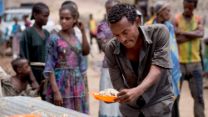

Disability inclusion across the United Nations Office for the Coordination of Humanitarian Affairs has grown significantly. The number of persons with disabilities reached through OCHA’s Country Funds increased from 1.86 million in 2019 to more than 5.2 million in 2024.
Their share among all people assisted rose from 7 percent to 19 percent. This growth reflects stronger allocation strategies, better data tracking, and wider engagement of organisations of persons with disabilities.
These findings are contained in a new study, Disability Inclusion across OCHA’s Country Funds. The study reviews how disability inclusion is embedded in OCHA-managed Country Humanitarian Funds.
Under the Leave No One Behind! Phase 4 project, CBM’s inclusive health initiative in collaboration with the United Nations Office for the Coordination of Humanitarian Affairs (OCHA), Pooled Funds Branch, published the study Disability Inclusion across OCHA’s Country Funds.
These study highlight a reality – persons with disabilities face higher risks in crises. They are more likely to miss out on food distributions, health services, and protection support when systems fail to address their needs.
The growth in OCHA funding shows a shift toward responses that recognise these risks and allocate resources accordingly. This reflects stronger allocation strategies, improved data tracking, and greater engagement of organisations of persons with disabilities (OPDs).
What are OCHA humanitarian funds?
OCHA-managed Country Humanitarian Funds are pooled funding mechanisms that channel donor contributions into a single country-specific fund. They enable rapid, flexible financing for humanitarian response, supporting local and international partners to deliver life-saving assistance.
Key drivers of change
Key enablers included alignment with global frameworks (Inter-Agency Standing Committee Guidelines, the United Nations Disability Inclusion Strategy), leadership and practical guidance from OCHA, targeted funding envelopes, such as Nigeria’s Breaking Down Barriers envelope, and technical partnerships with experts such as CBM and Handicap International. OPD participation in governance and consortia approaches in Myanmar and Venezuela proved critical for localisation and accountability.
Remaining gaps
Nevertheless, Inclusion remains uneven and fragile. Persistent gaps include inconsistent data quality, lack of a disability marker, limited OPD representation or technical capacity, and capacity constraints within Humanitarian Financing Units. Progress often depends on individual leadership rather than institutionalised systems, and resource shortages risk regression.
Next steps and project information
The study was launched and key findings were presented during a regular meeting of OCHA's Country Fund Managers on Tuesday, 25th November, by IHA and OCHA, with the aim of serving as an evidence base for the 2026 annual planning processes. It will be shared with a wider audience in a global Disability Reference Group Meeting on January 13th, 2026.
.png)