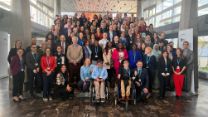
The WHO Disability Health Equity Network forms part of the WHO Disability Health Equity Initiative. The initiative builds on global commitments, including the WHO Global Disability Action Plan, the 2030 Agenda, the UN Disability Inclusion Strategy, and the 2021 World Health Assembly resolution affirming the right to health for persons with disabilities. WHO launched the initiative following the 2022 Global Report on Health Equity for Persons with Disabilities to accelerate change and promote shared learning.
The network focuses on four work areas. Building leadership on health equity among persons with disabilities. Elevating health equity as a political priority in health. Creating a disability inclusive health sector. Strengthening indicators, evidence, and monitoring.
Why is the Network relevant to CBM?
CBM membership aligns with the organisation's vision of an inclusive world where all persons with disabilities enjoy human rights and reach full potential.
CBM supported the network's development from an early stage, serving on the founding committee and focusing on translating global commitments into practical change.
What will be CBM’s role in the network?
Through the network, CBM will strengthen advocacy for inclusive health at global and national levels, share experience from inclusive eye health, ear and hearing care, neglected tropical diseases, and rehabilitation, and collaborate with diverse health actors to strengthen inclusive health systems. The workstreams will also support stronger collaboration at the country level, including with governments where CBM works.

.png)


