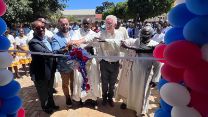
CBM funds new optical workshop for Karamoja’s pastoralist communities in Uganda

A new optical workshop now sits inside St Joseph’s Hospital Kitgum Eye Unit, so patients can move from eye exam to fitted spectacles without leaving the hospital.

The investment addresses Kitgum’s high rates of blindness and longstanding eye care gaps

CBM Italy funded the facility as part of our push to widen eye care across Uganda’s underserved north and east, including Karamoja.

Karamoja stretches along Uganda’s north-eastern borderlands near Kenya and South Sudan. Many families rely on livestock and seasonal movement to find pasture and water. Finding and affording eye health services is often low on their priority list, especially when these services are not readily available.

In Karamoja, gaps in clinic staffing and equipment leave many households without routine access to health services.


CBM provides new on-site spectacles

CBM has invested €100,000 in expanding the optical workshop and related eye health services to make them inclusive and available.

At the new optical workshop, eyeglasses are crafted, including lens cutting and shaping to fit prescriptions and frames. The process involves assembling lenses into frames, adjusting the fit, and dispensing completed spectacles. Basic servicing includes alignment checks, minor repairs, and refitting when needed.

CBM Uganda Country Director Jackie Marlene Kwesiga said the investment responds to high rates of blindness and long-standing gaps in eye care access.

St Joseph’s Hospital Kitgum commissioned the workshop on 14 April 2026. Monsignor Martin Agwee commissioned the facility during a ceremony attended by hospital leaders, district stakeholders, and partners.

What changed for patients

The facility was commissioned by Monsignor Martin Agwee.

Before the workshop opened, the hospital examined patients and wrote prescriptions, then sent the orders to an external provider in Kampala for lens production.

Patients then waited for spectacles to return by bus. Turnaround ranged from two weeks to three months.

Basic single-vision spectacles cost about €50 (UGX 200,000).

Now the Eye Unit expects patients to complete examination and spectacle fitting in one place. Hospital leaders said this change will cut waiting time and reduce travel and referral costs for families who previously had to travel long distances for optical services.

Targets set through 2028

The hospital and partners set service targets for the base hospital and outreach.

  • Total persons reached through integrated eye health services at the base hospital and surrounding communities will rise from 3,756 to 21,600 by 2027.
  • Refractions done by the hospital will rise from 892 to 3,700 by 2028.
  • Consultations and eye screening at the base hospital will rise from 2,688 to 8,600 by 2027, including use of Peek technology.

Spectacles dispensed will scale to 5,000 distance spectacles, 2,000 near spectacles, and 6,000 bifocal or progressive spectacles.

Who the outreach aims to reach

Patients waiting for services at St Joseph’s Hospital, Kitgum

The outreach plan estimates 21,600 people reached across targeted Northern Uganda communities, including 7,000 children, 14,000 adults, and 600 young mothers.

Target groups include patients visiting St Joseph’s eye clinic and nearby clinics who need correction for uncorrected refractive errors or post-operative correction after cataract surgery. These eye problems reduce vision because the eye does not focus light correctly, the lens turns cloudy, or vision stays low even after standard care. Spectacles correct refractive errors and age-related near vision loss; cataract surgery clears the cloudy lens, and many patients still need spectacles after surgery. Low vision care fits the best usable correction and support.

The plan also includes primary and secondary school children, plus vulnerable community members identified through outreach led by village health volunteers.

Previous outreach work in the same service network screened large numbers of people and recorded that 17 percent of those reached were persons with disabilities.

Why the hospital was picked

Northern Uganda has operated without an optical laboratory across Acholi, Karamoja, and West Nile. Spectacle lens supply has depended on Kampala or Entebbe.

St Joseph’s Hospital Kitgum already runs a secondary-level Eye Centre and serves patients from Kitgum and neighbouring districts. That base made it a practical site for an optical workshop that produces and fits spectacles locally.

The Eye Centre operates outpatient clinics and surgical services supported by one ophthalmologist, one senior ophthalmic clinical officer, and three nurses trained as ophthalmic assistants.

The hospital also works with regional facilities, including support arrangements with Kitgum Government Hospital and quarterly mobile eye clinics to partner sites for cataract examinations and surgeries.

Blindness and refractive error behind the investment

Uncorrected refractive errors and cataracts account for most avoidable vision loss, and refractive errors need correction rather than cure.

National figures put Uganda’s blindness burden at more than 400,000 people, with about 1 million people living with varying degrees of visual impairment.

A Rapid Assessment of Avoidable Blindness study of Northern Uganda, conducted in December 2023, reported a bilateral blindness prevalence of 4.2 per cent in the sampled population, with severe visual impairment at 4.9 per cent and moderate visual impairment at 13.1 per cent.

The same findings linked untreated cataracts to bilateral blindness and severe and moderate visual impairment, while uncorrected refractive errors drove mild visual impairment.

What to watch next

The rollout includes staffing and training tied to the new workshop, including low vision refraction training for clinicians and low vision dispensing training for an optician role.

The service model also pairs outreach and school screening with a subsidy approach guided by a vulnerability assessment tool, aiming to keep spectacles affordable for low-income households and other vulnerable groups.