The project’s targeting reflects this intent. ECO-FOOD will organise 1,108 marginalised nationals from 221 households into 37 farmer groups, built around land access and proximity. The project sets participation ratios at 40 per cent women, 20 per cent youth, 10 per cent persons with disabilities, and 30 per cent men.
The project also extends beyond households. It targets farmers' organisations and local agribusiness actors to improve how markets work for small-scale producers and excluded groups.
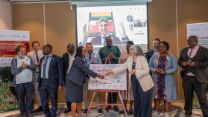
AICS’s director, Teresa Savanella, attended the launch in Kampala. The event brought together representatives from the Embassy of Italy in Uganda, AICS, CBM Italy, and Ugandan ministries responsible for agriculture, health, gender and social development, and trade and industry. Organisations of persons with disabilities, civil society groups, international partners, and consortium members were also represented.
In this project, CBM will work through district structures and partners, including Community Empowerment for Rural Development, the National Union of Disabled Persons of Uganda, and the Institute for International Co-operation and Development.
ECO-FOOD Uganda aligns with Uganda’s priorities for food security, climate resilience, and inclusive economic growth, where the payoff of inclusion is measurable through higher incomes, improved decision-making, diet diversification, and environmental conservation.