
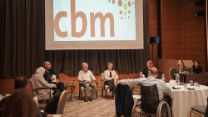

As Lebanon’s humanitarian crisis deepens, persons with disabilities face higher risks of hunger, exclusion, and loss of services. CBM marked 50 years of inclusive work in Lebanon at an event in Beirut.
The Eastern Mediterranean team hosted the gathering, which brought together CBM local partners, disability inclusion stakeholders, and International NGO representatives.
The event took place at a time when Lebanon is facing a severe humanitarian crisis. Poverty and food insecurity are rising. The healthcare system continues to weaken. The crisis has also been shaped by political instability and the lingering effects of the massive blast in the Beirut harbour in August 2020.
Following the Beirut harbour catastrophe, CBM decided to resume operations in Lebanon, which had been phased out a few years earlier.
After an immediate humanitarian response to support persons with disabilities affected by the blast, CBM and its partner, the Lebanese Union for People with Physical Disabilities (LUPD), started shifting towards a more recovery-focused approach.
In Lebanon, CBM is committed to fostering a more resilient and inclusive society—one that is better equipped to respond to emergencies and provide meaningful support to those most affected. CBM’s programmes in Lebanon focus on strengthening health systems, improving food security, enhancing socio‑economic resilience, and ensuring inclusive assistance for vulnerable communities across the country.
Today, CBM works with four local partner organizations LUPD, Arcenciel, Mousawat Organization, and Nusaned—to implement diverse projects that support vulnerable host communities and refugees. These initiatives are active across Bekaa, Akkar, South Lebanon, Beirut, and Mount Lebanon, addressing both immediate needs and long‑term resilience.
The projects have directly benefited more that 21,000, people, including persons with disabilities, and indirectly supports around 86,000 community members. A celebration of 50 years of impact


.jpg)