
Long-standing collaboration with local partners

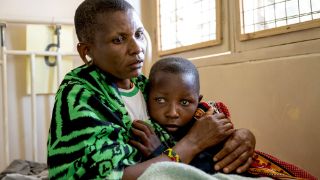
CBM's enduring commitment to Tanzania spans over half a century. During this time, it has consistently engaged in programmes for and with persons with disabilities in collaboration with local partners such as organisations of persons with disabilities, churches, and the Ministry of Health.
CBM sent experts such as ophthalmologists, educationalists, occupational therapists, orthopaedic surgeons and physiotherapists for research and training. Among them was the British ophthalmologist Dr Joseph Taylor, whose experience with locally produced eye drops, for example, made him a pioneer for "eye health for all" back in the 1970s and 1980s. The WHO brochure "The local small scale preparation of eye drops", which he co-developed, helped clinics in rural regions to produce urgently needed eye drops themselves at low cost.
To date, CBM's areas of work include inclusive eye care, rehabilitation, advocacy work for and with persons with disabilities, inclusive education, and community-based inclusive development (CBID) for persons with disabilities, their families, and the communities in which they live.
Over the decades, around 80 projects (excluding COVID projects) have been supported, including more than 30 inclusive eye health projects. The others are mainly divided between CBID, rehabilitation work and education. Support has been extended to orphanages, as well as help for women with fistula and people with leprosy.
Despite these successes, people with low income in rural areas still do not receive adequate medical care, putting them at risk of developing a disability. It is estimated that more than three million people in Tanzania have a disability, many due to eye diseases, which are among the ten most common causes of illness. In this context, the work of CBM and its partners in strengthening eye health care in the country is ever so important and necessary, as it ensures that all people, especially those in rural areas, are reached.


